9.9.12

Infographics Drive Traffic (Or Make You Laugh)

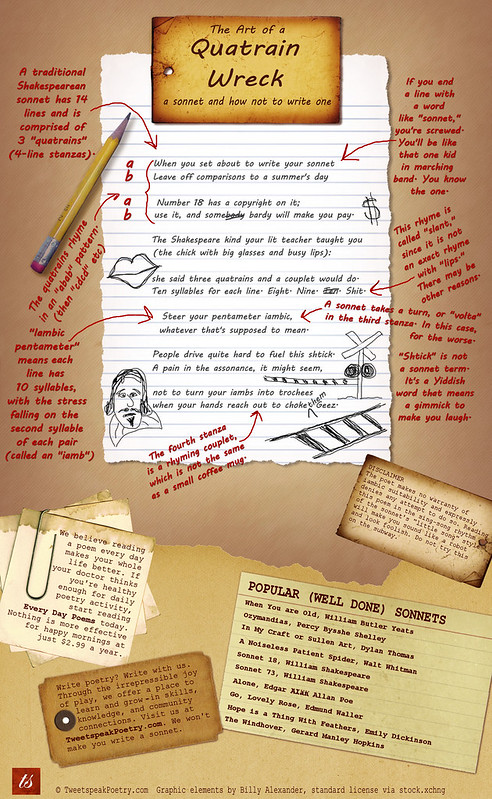
Sonnet Infographic 5

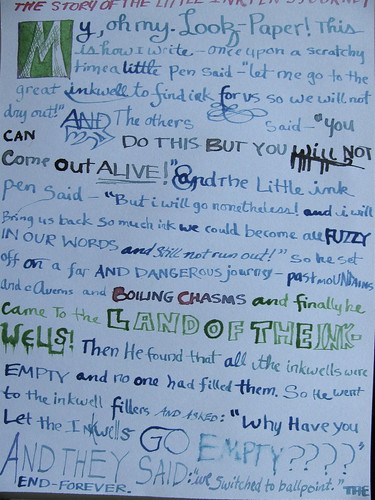
Infographics are the new thing, did you know that? Because they drive traffic. And sometimes, like the one above, they will even make you laugh.

Labels: , ,

21.8.12

A Must-Have Infographic

Read a Poem Today

15.8.12

WordCandy Wednesday


photo by Sarah Elwell


WordCandy Wednesday

28.7.12

Secret of a Creative Life, Business and Otherwise


Easiest post I've done for a while. This just says it. For dreams, for my creative life, for business. I love WordCandy.me :)

Beautiful photo by Sarah Elwell.

2.7.12

Do This Instead of Making Your Kids Study and Stay Off the Internet

Seed

Have you heard the news that higher education is in question? Yeah, The New York Times says so, in End the University as We Know It.

Maybe you have heard the news. But you are still telling your kids that their best bet for success in life is to study for the next test, get good grades, go to college, rack up the $100,000 in debt... for the good cause of a safe financial landing that may or may not ever materialize.

Or maybe you are beginning to raise your own questions about what's best for your kids. I know I am. And it's got me in a bit of turmoil, to be honest.

When I'm in this kind of sticky spot, I often take a two-pronged approach. Which means my kids are studying and are (for now) thinking that college is non-negotiable.

But on the side, I've opened up a new path of inquiry. What if? What if higher education isn't going to be their best bet for success? What should I be doing to prepare for that possibility?

As you know, I am answering that partly by pursuing Kids in Business, an informal program between us girls, to teach them about entrepreneurism.

Somewhere along their high school way, I'm also going to ask them to read The Education of Millionaires.

Jane Friedman sold me on this title, and now the book itself sold me, and after that I just bought something else:

Domain names for each of my girls, using their true names. Because if their internet brand is going to be their ticket (as opposed to their education-laden resume), then they are going to need their own internet real estate, with their names on the door.

That is one of the suggestions in this excellent, excellent book.

What are you waiting for? Get your kids on the internet in the way they need to be. Teach them how to make a Google trail that will someday sell them to employers or help them have a successful freelance or other business.

Don't let education be their sole end.


RELATED:
from the New York Times: A Generation Hobbled by the Soaring Cost of College

Labels: , , , , ,

30.6.12

Art & Technology


Just when Kindle has been threatening me because I haven't published in a while (see, you can subscribe to this blog through Kindle, and they have standards I have neglected to meet, because, well, I blog when I want to)... anyway, just when they suggested it would be good for them to release me from my blogging responsibilities, I was contacted by Estelle Shumann, who requested a chance to guest blog.


This should keep me on Kindle's good side for at least 30 days or less. 


So here's Estelle, on the issue of Art education. A topic dear to my heart...
____


Though it’s tempting to separate art from technology today, the two are actually closely related. The separation often comes into the classroom, where art teachers have little budget for new technology and technology teachers have little experience in the arts. But combining them can lead the way for imaginative art and innovative technology. For instance, with classes available though an online university.

Art is the more important starting point, argues Mark Tocchet, chair of the illustration department at Pennsylvania’s University of the Arts. He says, "If you teach students a program, in two years it’s probably obsolete, but if you teach them to draw or paint, they’re going to do well–whether it’s drawing with a pencil or drawing with technology." Drawing, painting, and tactile arts have been around for thousands of years. Digital technology, which is a recent innovation, is constantly changing. Though it is of course important for students to learn the newest technology, their starting point should be in the traditional forms of art.

The late Steve Jobs, in his well-known address to Stanford University graduates in 2005, says that most of his college classes were simply the ones that interested him. His calligraphy class, in particular, dramatically changed his understanding of line and form and influenced his designs for the first Mac computers. This came as a surprise to many listeners, since it was commonly thought that many great technological ideas come from the study of technology. Jobs showed us, however, that technological inventions can spring from a study of the arts.

Art education, though, does not have its head in the sand. Nowadays, an art class incorporates much more technology than it did twenty years ago, when personal computers were just coming into use and the World Wide Web did not yet exist. Art students today work with a variety of cameras, computers and software programs to create the pieces they want. Rather than sticking to traditional forms, art has come to encompass and, in some cases, rely on technology for its creativity. This merging of the two is permanent: in the future, we will see only more innovative and creative channels opening from the combination of art and technology.

According to Boston College statistics, enrollment in arts education is still dominated by female students while technology is typically a male-dominated field. The leveling in college enrollment, however, arises as ideas between the two fields are shared more and more. 


No longer will one field attract innovators of one gender over another. And as the two expand to include each other, they will also attract more students overall. For example, an art graduate will not be limited to a career in the art field; he could go on to create the newest smartphone. Similarly, a graduate in technology could use her expertise to create an art display using the functions of several different machines. The idea is not to sacrifice the beauty of one for another but to bring the best pieces to influence both art and technology.

Labels: ,

5.5.12

Career Counseling in the Kitchen

Field Roast Sausage


Due to the Loss of Field Roast Artisan Grain Sausage

Under the pastry board
that pulls out like an awning,
I found her. Half in, half out
of a cabinet door,
its shelter a hard cloak
that could hide the tears.

She was weeping
because we forgot to leave her
more than one ring
of spicy sausage.

Come here,

I told her, and gathered her
thirteen-year-old frame
into my arms, pulled her
towards my warm body.

I love that you are crying about sausage,

I said. And she rolled her eyes
like I was just some crazy mama
trying to comfort with nonsense.

No, really,

I whispered. Because, I told her,
not everyone would cry about sausage.
She might be a famous chef someday
or a travel and food writer.

Such a person might cry
under an awning in New York
or Paris, about a sausage,
or a lost link to some recipe
from the past.

28.4.12

Kids in Business: Networking Starts Early

Water on Bleeding Heart Leaf

What is Business?

That's the first question we asked entrepreneur Claire Burge, in our second meeting of Kids in Business.

Claire didn't miss a beat.

"Business is meeting a customer's need," she said. "You might not even know who the customer is yet. You might not have an amazing idea. But if you think about people's critical needs, that's the beginning."

Then Claire shared with us about her very first business, Simplify Learning, which was eventually bought by another education company. It was an uphill struggle to develop the business initially, because even though she saw the need for students to have simple learning tools incorporating technology, the universities she approached did not. In the end, her success was propelled partly by identifying individuals within the universities, who would help champion the idea.

"What do you think business is?" she asked. (If you ever meet Claire, be prepared for the turn-back question. She really loves to hear what people think.)

The girls sat quietly. After all, they'd already heard that business might be different from a hobby and that it might mean crawling under houses and warding off German Shepherds. 

I answered the question with a rather rambly treatise on how business is also about making money—it's not philanthropy—and yet it needs to be about doing that with respect for the people who work with us. "Too many businesses use people up," I said. "That's not the kind of business I want to run. I want a business culture where managers get people to do their best, yes, but with an eye towards making sure they're in their sweet spots... and a watchfulness for when people need a break or a change."


Moving on, we talked about the challenges for women, and I wondered what my girls thought when they heard "it's a male-dominated field"... again. They'd heard that phrase in our first meeting too. But they also heard me laugh, noting that the some of the work I'm currently doing in a male-dominated field is being done with a core team of women. (I think it might have been channeling my German grandmother with that laugh, as she was a business woman many times over.)

Gender, age: these things can work against us, but Claire was extremely encouraging. She told a story of a fourteen-year-old app developer in Ireland, and she told us about her own path of pursuing knowledge about business beginning at age twelve (before ever going to college, she worked for an accounting business, a law firm, an HR firm, a recruiting business, and a software company, so she could figure out what she preferred to study and pursue as a potential career).

When asked what she'd recommend now for the girls (besides getting five jobs), Claire emphasized the importance of having older friends and talking to older people. "I grew up surrounded by older cousins, and my parent's friends all had older kids. Also, I was an only child, and my dad treated me like an adult; it really made a difference. You can learn a lot from older people," she said.

And isn't that exactly what we're doing with Kids in Business?

Photo of Claire Burge, by Kelly Sauer. Check out some of the businesses Claire Burge is currently involved with: Get Organised, Wedding Dates. Claire is also on the core team helping to develop an app with Tweetspeak Poetry.


20.4.12

Kids in Business: The Insurance Adjuster Wins

Dressed

Our first Kids in Business meeting—with spur-of-the-moment guest Lyla Lindquist—was awesome. Lyla is an insurance adjuster who runs her own business, and since she wasn't waylaid by any recent disasters, she made time for us on short notice. By the end of our meeting, I said I lost five pounds from all the laughing (and now we are thinking of how we might market Lyla as a weight-loss solution).

Besides hearing stories of old men who pretended to get run over or who lived in sub-zero trailers that got ransacked in the middle of nowhere, we learned about the relativity of correct business attire. (Jeans for burrowing under houses. Khakis for above-ground investigations of floods with left-over mold. Slacks for meetings with distressed parents whose children have been bowled over by rogue domestic animals.)

Pajamas, we learned, could potentially suffice as home office attire if they are t-shirts and sweats, but for reasons of focus and a basic sense of professionalism (and to avoid the overwhelming desire to nap between calls), we were told (and mostly agreed) that it is not a bad practice to actually get dressed every day (especially if you have no curtains on your windows).

Though every business is ultimately unique, and this was so evident in a discussion of insurance adjusting, one of the main takeaways from our time with Lyla was the idea that most businesses will be more profitable if you have:

1. knowledge in your area of interest
2. professional contacts (or an effective way to quickly obtain them)

We also discussed what makes a business different from a hobby:

1. it's not something you can just stop doing, because you are trying to make money from it
2. it's not something you can just stop doing, because you have spent money trying to make money from it

Of course you could walk away from a business. Instagram just did that, right? Okay, yes, for $1 billion from Facebook. 

As for the business of insurance adjustment, we learned that it helps to be:

1. braver than the mailman (German shepherds are not uncommon in the field)
2. faster than the mailman (scary and sometimes dangerous situations occasionally arise)
3. really funny or at least appreciative of found-humor (otherwise cynicism about old men who pretend to get run over might turn you into a grouchy person)

I figure it was a rousing success, because my girls would love to talk to Lyla again—about business or anything else she'd care to share. After all, both girls agreed that as far as story-telling goes, J.K. Rowling has got nothing on Lyla, except maybe a few more movies and a few less German shepherds to her name.

Labels: , ,

Kids in Business: The First Day

Sara at the Computer

This morning I was feeling the need for business colleagues. Oh, I have plenty, really. But none that I see face to face.

As I was writing about this in my business journal, it suddenly occurred to me that maybe I *do* have colleagues, right here in my own home. I just need to think about them that way. Thus, our new Friday afternoon routine: Kids in Business.

The girls (12 and 14) and I will meet for one hour on Fridays and sometimes host guests. We are really looking forward to speaking with Claire Burge next Friday, for instance. And today, spur of the moment, Lyla Lindquist has graciously agreed to Skype with us.

I don't know where we'll go with all this, except that today we'll start to think about our direction together. I'm coming to the meeting with a a list of ideas. I'll share these with the girls and ask them to come up with more ideas.

So far, this is what I've got. It's just messy thoughts:

—read business articles or a chapter from a business book and discuss; maybe watch a TED Talk or other interesting video

—host fun entrepreneurs who can chat briefly with us

—teach skills like bookkeeping, how to run a meeting, how to use accounting software

—share our business dreams

—have the girls share some research they might do about other kids in business—or anyone in business, for that matter

—cover a host of important topics like financing, branding, marketing, selling, Internet meeting and connecting tools

—share about our respective business goals and accomplishments (the girls have a few non-income-producing "businesses," so we could start with these)

Both girls are happy with the idea (so far :) and they are even dressing up for the meeting. Sonia felt that it was important to look "creative," since we are dealing with entrepreneurship. Thus, her nail polish. In different colors. Sara is set to go too. (Look, she's already doing phone work in her fancy meeting clothes. Gotta love that desk, too. First benefit of working for yourself. You get to choose your own office equipment. ;-)

Labels: , , ,

19.4.12

1001 Ways to Improve Your Personal Finances: Tip #2—The Starbucks Challenge

Daffodil Windmill

I have two friends.

Okay, I have more than two friends. But for the purposes of this post, I have two friends.

They are real people, not imaginary friends.

The first paid off his house, goes on occasional vacations, and recently bought a second property as a form of investment. He and his family throw fun parties. I like their strawberry rhubarb pie. Maybe you are like my first friend (if so, I might visit you soon for pie.)

My second friend has a second mortgage on his first house, goes on occasional vacations, and often throws huge, fun parties for family occasions. He recently got a big surprise. One day he went outside to get into his car, but the car was gone. While he and his family were sleeping, the car had been stolen away. Not by thieves, but by a repossession company.

I have another friend. This might not count. He's my dad. He helps people like my second friend repossess their financial security. It's not an easy task of course. People have to want it.

Maybe you are like my first friend. If so, good. You probably already take advantage of little known financial savings opportunities like duct-tape wart removal. Maybe you are ready to start a business, and you have everything you need (almost) to Get Rich Click.

Maybe you are like my second friend. Or maybe you are somewhere along the middle of the spectrum. Wherever you're at, if you are worried about the sustainability of your financial practices, my dad has a list of things you can do (he forgot to mention homemade pie-making, so I am going to just stick that in here right now. Did you know it is a lot cheaper to make your own pie than buy it?).

For argument's sake, let's say you followed at least part of Alexa von Tobel's 5 Must-Follow Principles for Personal Finance. Let's say you are not spending more than 50% of your income on housing and other non-negotiables (unfortunately, pie is negotiable).

However, you're in credit card debt over a whole host of negotiables, which is affecting your ability to make your car and house payments on time (this is what happened to my second friend). And somebody wants the money back sometime (or your car in lieu of it, or worse, your house).

It is time to pay that baby down (and, no, you may not throw huge parties in the meantime). Best approach?

1001 Ways to Improve Your Personal Finances: Tip #2

Make 3 lifestyle changes that can reduce your negotiable costs. Give up Starbucks. Borrow books from the library instead of buying them. Turn your heat down a few degrees (or your air conditioner up a few). Whatever it takes to reduce your costs.

That's it.

I know, we didn't say a word about the credit card in this tip. That's because you have to start by freeing up a little money from somewhere. Even if it's only ten dollars a month. Preferably $25. A hundred dollars? Oh, that'd be grand.

When you have decided how you are going to free up some money—preferably at least the amount of your minimum payment on your lowest-balance credit card—you'll be ready for the next step: Paying down those credit cards.

But for today, just sit down and make a list of everything you spend money on and decide on 3 lifestyle changes. Let everything else remain equal for now, but commit to those 3 changes.

You can do this. It's only 3 things.


BONUS (completely free of charge)...


Today's personal finances confession:

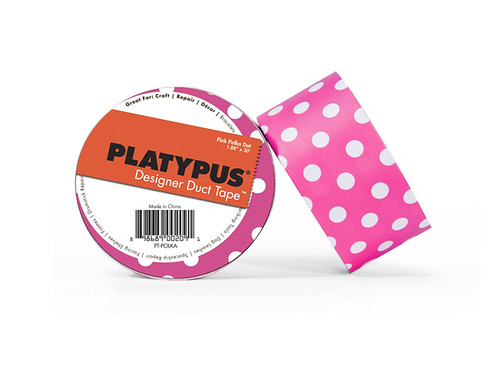
I still didn't buy the pink duct tape, though we actually saw some in the grocery store and my daughter wanted it because of the pink duct tape post. However, I did buy a book for a friend the other day. She probably didn't need the book, but I wanted to buy it for her. It was a small splurge, but it was in the budget. And I like the author well enough; he's smart and funny, and he seems like the type who might eat pie.

RELATED POST:

1001 Ways to Improve Your Personal FInances: Tip #1 Pink Duct Tape

Labels: , ,