7.1.12

Where Do You FInd Words?

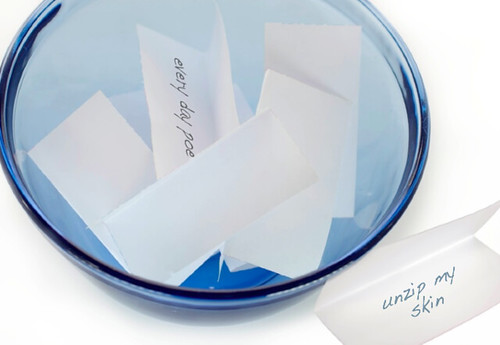
Word Bowl 2011

My youngest daughter is always the champion. When she sees a new idea and loves it, she takes off at top speed.

I showed her the WordBowl, 2011, and she was enchanted. She started gathering woven bowls from around the house. Bowls that came from Kenya. Starting cutting slips of paper and plying me for words.

"Sparkly," that's a good word, isn't it, Mommy?"

"That's a great word."

"Is this how you spell threaten? T h r e a t e n."

"Wow, you spelled that right!"

"I know how to spell a lot of things, Mommy. Don't you know?"

And she fills her bowl. And she writes a poem about playing ball with the moon. And I laugh when the ball goes bop-bop-bop, and I get emotional when the moon and she must part. She's found her words, and she's filled me.

Labels: , ,

19.12.11

Should We Force People to Write?

sun

I admit in Rumors of Water: Thoughts on Creativity & Writing, that I never made my daughters write (they are home-educated, and I do it how I want).

In our education experience together, we've done a lot of other things that I believe turned my girls into writers, but mandatory writing was not one of them.

I am thinking about this today especially, after reading a quote at this wonderful place:

But what if the reading problem isn’t as simple as forcing students to read and write more (which we should also do)?

Really? Should we force students to write? Here's a poem from Sara, age 14, which she handed me today. She made up her own form for it. This, from a girl who has never been forced to write...


The Pirates and the Sun

Once upon a long ago time
When lemon trees fell in love with lime,
And all the fairy tales were true (if only in your mind)
A pirate sailed the seven seas to find the treasure.

The treasure sat on the rim of the sun,
At the edge of the sea, number 101,
At the edge of the night, just before it’s done,
And there sat the treasure, the only one.

The pirate’s flag was big and black,
It billowed and whipped and sometimes lay slack,
It was made of (don’t tell) a regular sack,
But it was the flag of a pirate.

The pirate smiled and twirled his moustache,
He grinned and rubbed his hands at the sight of the stash,
And one gold tooth in his mouth did flash,
And every pirate got gold, from the first to the last.

Now the pirates sailed back, for a year and a day,
And they met an old monk, who taught them how to pray,
And they had many adventures, don’t ever say
They weren’t the greatest pirates who lived.

Yes they sailed away, and now they came home,
With a bag of gold, and a horse from Rome,
And a parrot, a stick, and a wrinkled old gnome,
A drum and a harp and a broken trombone.

But the world had changed when they sailed to the sun,
To the last ever sea (number 101)
And the pirates’ fleet was sunken and gone,
And the world was round in the minds of everyone.

So the pirates took one look at the cities of the day,
From London to New York to the coast of Malay,
To the skyscrapers high and the waters grey,
And they turned right around, and went back where they came.

And now they do sail, past the coasts one by one,
Forever looking for the treasure, the only one,
And the edge of the sea right next the sun,
And the time they left behind long ago.

For what use is gold if your world is gone?
What use is a ship when it’s old and down-run?
What use is a crew of pirates who come
To the deck always looking for the thing which they long?


If we shouldn't force students to write (and I believe we shouldn't), what is the key to getting them to a place of excellence in reading and writing? Well, perhaps to answer to that question, you'll need to read the book. ;-) But I'd also love to hear your ideas right here today.

Labels: ,

22.11.11

What if You Have a Genius?


"And what if the genius is yours for one exquisite moment of your life," says Elizabeth Gilbert, "and then you pass it along?"

(I feel this way about the writing I've done. I feel like if I never accomplish anything major again, then the process of passing it along to those I teach and mentor is something beautiful and just as exquisite in its way.)

Labels: , ,

8.10.11

The Power-Point Embraced

Red Doors

Yesterday I shared how I encouraged my daughter to take her anger and channel it into a reasoned response. One reader asked to see that response. I asked Sara if it was okay, and she kindly said yes...

_____

I read all the stories and excerpts.

And I come to this question: why does the Literature book have mean, depressing, senseless stories? It’s just meanness and meanness and nothing has happened. Nothing has changed. I once read somewhere that writers have a responsibility for their stories—you have to think about the readers, and if your story will harm more than it will help. I wasn’t sure what I thought of that before, but now I agree. Some stories you shouldn’t have to read, unless you choose to. That’s why there are so many in the world—so everyone has a type of story they find fun, or interesting, or true, or wise, or perfect. Forcing someone to read story after story that is depressing does not have any use that I can see.

The ancient Greeks thought that writing comedy was a greater accomplishment than writing tragedy. William Faulkner, in his Nobel Prize speech, seems to agree. He doesn’t talk about comedy per se, but he notes that we need stories that “are not merely… the record of man…[but] one of the props, the pillars to help him endure and prevail.” If a story lacks the universal truths of the resilient human spirit, he says it is “ephemeral and doomed.”

Some of the stories in the Literature book seem to lack these universal truths, as if they were a commentary on hopelessness instead of an experience of humanity—not merely the good or the evil, but the will to hope, even when there is no escape, to try, even when they can change nothing—like Anne Frank. I believe that stories like some in the Literature book will not be remembered in a thousand /200/300/500 years—unless it is for something other than the stories themselves, like their virtue as cultural artifacts. The oldest piece of literature in the world, Gilgamesh, is still being retranslated and retold and read. The Lord of The Rings is the same, Sherlock Holmes is the same—they have the life and energy now that they had when they were first written. Why? Because they tell of a story that is as true now as it was then, a story that transcends the boundaries of language and time.

_____

On Hopeless Literature Essay, by Sara, age 14. Used with permission.

Labels: ,

25.8.11

Writing Comes from Reading

Sea on Knees

Soon I'll be sharing my writing-teacher secrets, as part of Rumors of Water: Thoughts on Creativity & Writing.

Oddly, many of my secrets look like living. And reading. A lot.

My sweet Sara reads about a six hundred (unassigned) books during a school year and a great deal of poetry. All that reading, I'm convinced, has shaped her writing. Here, for instance, is one of her contributions to the sonneteering we've been doing over at Tweetspeak. It makes me think... I need to read... a lot more sonnets if I ever want to catch up with her abilities.

(Though not a perfect sonnet by any means, she wrote this one in 10 minutes, while I was also bothering her about coming to answer a phone call. Yeah, I'm proud of her. Forgive me? :)

The Narrator

I'll tell you now a tale both sad and true,
the story of the cuckoo in the tree
across the endless, vast, and wave-filled sea.
And of the flute, the crying notes it blew
to break and make a spell with one bright tune,
and what it did to everyone, and me,
a girl who only wishéd to be free
of the wicked witches, and now you

say that I know nothing of all that time.
Well, I'll tell the tale both loud and clear.
I'll even tell it—listen now—in rhyme.
And then I'll take from you, all you hold dear
and we will know the truth, and know the lie.
I'll make you beg on bended knees with tears.

— Sara Barkat, age 14


This poem is offered for The High Calling and Tweetspeak's Random Acts of Poetry/PhotoPlay celebration.

Labels: , , ,

5.7.11

How Do We Learn Words?

Delicate Machinery Cover

Today I've been writing about words. Just in a tucked-away place. Out on the back porch, with a cup of Red Velvet tea.

I've been writing about my girls, and all the words we've shared for so long. This makes me happy. It is taking me to worlds where purple moths and fireflies teach me how delicate and beautiful and sometimes amusing life can be.

Because I have been writing in a tucked-away place, I feel a little guilty for how I've been ignoring my blogs. (You noticed, didn't you? :)

Yet sometimes we need to shift spaces, write alone, away. Or we need to read, and read, and read.

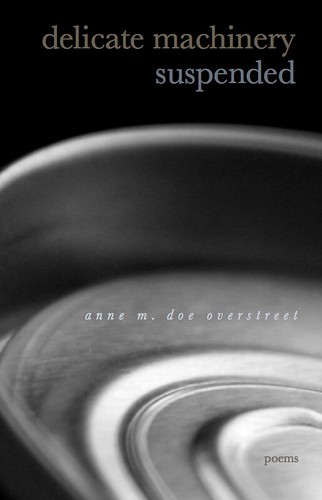
I have been reading The Art of the Sonnet. I cannot really write sonnets, but I like reading about poets who can. I have also been reading the new title from T. S. Poetry Press, Delicate Machinery Suspended, by Anne M. Doe Overstreet.

Anne has learned words. Carried words. She speaks of the purple arils of pomegranates, the sensible heels of a grandmother, the daughter "hung from the morning like a pearl pendant." She speaks of the dark that "draws down to cover our tracks, to divide us/from what we have just done."

I learn words from words like that. I carry them and share them with my girls. We kick off our sandals and lean closer to one another.

Labels: , ,

30.11.10

Optional Writing

Red Leaves on Stone

It's true.

I never make my girls write.

Some would say this makes me a terrible writing teacher. I would say I teach all the time, but not by assignment. Especially for writing, I teach only by example. In our little "school," this has worked just fine.

Last week, for instance, when Dave made his dare, I told my daughters about it. Then I wrote some poems and read them aloud.

My 13-year-old said she didn't think she could write a poem about a Christmas ghost. We talked for a while about what a "Christmas ghost" might mean. She still didn't think she could write about it.

Then she handed me a sestina. It's a 39-line poem that repeats end-words (or slight variations on them) in a rolling fashion. The final stanza includes all the end words. It's amazing what someone will write if you don't make her write it.

Here's the poem. Not really rocket science, but it's a nice beginning. :)

The Christmas Ghost

Hello, I called.
Hi there, Anyone?
(I've got a problem. I need a ghost.)
not just any ghost, oh no—
I need a ghost of Christmas.
Past, present, future: doesn't matter!

Doesn't matter!
I'll take any called
anything— so long as it's for Christmas.
Anyone.
Yes, I know...
a ghost?! You want a ghost?!

You are thinking, who wants a ghost?
This is the truth of the matter.
I don't need one that can't write or at least dictate. No.
I need a ghost who can make a poem. I've called
for a while, but no one came. Not anyone.
Just for the eve of Christmas.

Please. Just for Christmas
Eve I need a ghost.
Have a ghost, anyone?
Or better yet, maybe it doesn't matter!
Listen— it's called...
a poem about a ghost! Yes! Oh, no.

Uh oh, oh no.
Here's finally a Christmas—
called—
ghost.
Cool... a ghost. It's not made of matter.
(What is it made of... hmmm? Anyone?)

Help. Hold my hand! Anyone.
No, no, no...
Why am I here? Who are you? he asks. I answer, Um doesn't matter.
I thought I needed a Christmas
ghost—
but I don't! Sorry I called!


I bite my lip. Oh, but by the way, anyone... uh, ghost sir, while you're
        here, I need a Christmas
poem. Know any? About a ghost.

But... he's gone. It matters. I'm standing in a cold house sorry I called.

Poem by Sara, 13. Used with permission. Photo by J Barkat. This post is in honor of Random Acts of Poetry and One Shot Wednesday.

Labels: , , , ,

9.10.10

If You're Asked to Write for Us

Girl with Cornstalk

"Any writer can say that. Tell me something only you can tell me."

I've been known to say this to writers over at HighCallingBlogs.com (now TheHighCalling.org.) At first, this request can feel perplexing to a writer. Isn't it acceptable to say, "God changed me" or "grace healed me" or "I was convicted of sin"?

Sure, it's acceptable. But when 100 writers say it...or a 1,000 writers say it... or 10,000 writers say it, pretty soon we all start to sound the same. Any writer can say these things.

At TheHighCalling.org, we prefer to hear your stories. The ones that only you can tell. Stories of biscuits, glow sticks, road trips, and sad autumn mornings.

Why insist on stories? Heath & Heath note, "Stories have the amazing dual power to simulate and inspire." This often leads a listener to action.

Our tagline at TheHighCalling.org is "conversations about work, life, and God." Yet, in the end, we hope it's not just talk. We hope our readers will be inspired to act.

A few good biscuit stories might do the trick.


---

A note about writing for us: we do not accept queries, but rather work through established relationships in our Network. If you are telling great stories that inspire, comfort, challenge, or heal, you'll eventually be noticed by our Team. The best way to get noticed is to hang around the community, comment at our home page, comment on and link to other members' blogs, and interact with us on Twitter and Facebook. In other words, be social-media generous and interesting, and we'll eventually find your words. :)

---

Over at TheHighCalling.org we're reading and discussing Made to Stick: Why Some Ideas Survive and Others Die, by Heath & Heath. Want to join us? :)

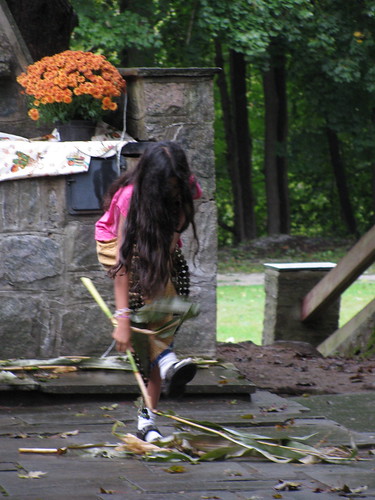
Girl with Cornstalk photo, by L.L. Barkat.

Labels: , , ,

24.8.10

The Child Philosopher

Ruby Falls Beehives

It never ceases to amaze me what children have on their minds. Why do we think we have so much to teach them? Why don't we trust?

For me, home education has become, more than anything, a challenge to remember that children are not little pieces of clay we are supposed to mold. Or, if they are in some way, well they bring their own form inherent in the clay, and we would do well to let it inform the way we hold and shape.

Today I found this from Sonia. I didn't tell her to write it. I didn't ask her to pose big philosophical questions. She did it on her own...

The Beginning or the End

A question that can't be answered
by anyone, but can be answered
by everyone,
which is better, the beginning
or the end?

The beginning is a new baby
born, a new friend,
an end is when things
stop.

Which is better,
the beginning of a book
or the end?

The beginning is when you
are intrigued, when you know
it keeps on going,
the end is when you're satisfied
and slap your book down on
the table with a triumphant
BANG, or sit alone thinking
or cry.

Which is better, the beginning
or the end?
There can be a new beginning,
yet a new beginning is the end,
the end of the old beginning,
they're the same.

Which is better? Neither?


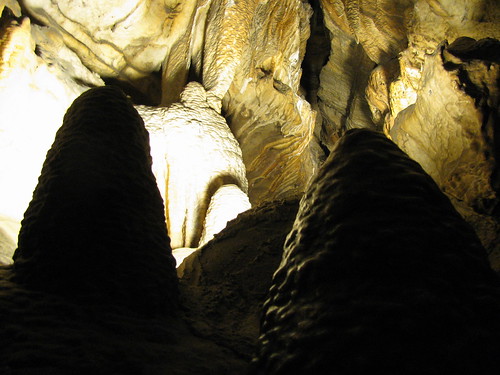
Poem by Sonia, 11. Ruby Falls underground photo, by L.L. Barkat.

Labels: , ,

1.4.10

Making April Educational (and fun)

Sonia at Rockwood

She woke me early to say, "I made breakfast for you!"

What a treat on April Fool's Day. A perfectly guileless action: waffles with blueberry compote and syrup, compliments of my Littlest.

We smiled around the sunny breakfast table, and I announced my sudden idea. "Hey, did you know it's National Poetry Month?"

The girls admitted they'd never heard of such a thing.

We decided then and there that we'd read a poem a day for the month of April. And the girls would write a poem a day, and I would feature their poetry here (as much as possible).

My Littlest decided to write down the poem titles we've read, and their page numbers, so she can go back to them if she likes. We even had a discussion about how English poetry didn't used to rhyme (it used alliteration), but when it merged with French (a rhyming language) everything got mixed up... and now we think we should rhyme in English when, well... that's not natural (the third poem below might be struggling through that idea! :)

Happy National Poetry Month. And so we begin...

The First Day

It's the first day of April,
light shines in the window,
the National Poetry Month.
When people write poetry
whenever they can, it's
the first day of April,
National Poetry Month!

-- by Sonia, 10


Just for Me

Write one
poem every
day just
for me, me
April.

Read one
poem every
day just
for me, me
April.

Just in April,
just for me,
just for me,
me April.

-- by Sonia


Try

Try to write a poem when
when you're thinking through
something different,
when you wonder
about things; then
you can't.

Your poem pursues the subject,
gets caught, and
never turns back.
Or you can order it back,
tell it to go,
force it.

You can do it,
you can...
but-- poems don't
work that way,
not naturally.

If this is your case,
then let it go, let it
write itself out--
it'll work.

-- by Sara, 12


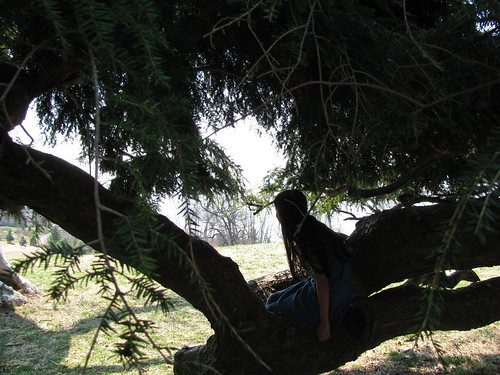
Sonia in the Tree photo by L.L. Barkat. Poems by Sara and Sonia, used with permission.

Labels: , , , , ,

30.7.09

Bad Writing's Born in the Back Seat

Butterfly Bush

You know that when I say bad writing, I mean writing with heart and style— as opposed to 'acceptable' good writing, which often has great power... to bore us.

How is 'bad' writing born?

At our house, where school is not defined by certain days of the week, hours of the day, and rooms of the house or world, 'bad' writing is often born in the back seat. Or over italian food at our favorite restaurant. Or on a walk while the moon peeks out and a warm breeze tickles the night.

It usually starts with my Littlest (now 10!!), who initiates a word game. One of her recent favorites is to play with alliteration in singles or pairs. She'll pick one or two consonants and before we know it, we've been lassoed into another round of playing with words. Here's a little evidence I found of an alliterative free-for-all she and her sister had on their way to get ice cream with Grandpa.

Apparently, all the phrases were code ways to say "We're going for ice cream." Believe me, I wouldn't have guessed it without being told. I took some poetic license and arranged the phrases to my liking. So, in the end, we collaborated on this poetic trip.


"Going for Ice Cream"

We're on our way to
the flower shop, to pick
up a tremendous kettle
of fish, some ticklish
bears, temporary

basalt, a terrible burglar
trapped in a basket, toxic
butter. When we get to the
tippity top of the mountain
there'll be tragic biscuits

terrible barrels of trash
bags, titanic ruins and
(not to be left out of
the excursion), a band
of terrified bathing suits.

— by Sara and Sonia

Butterfly Bush photo by L.L. Barkat.

Labels: , , ,