20.8.10

French on Fridays: Learn in Your Sleep
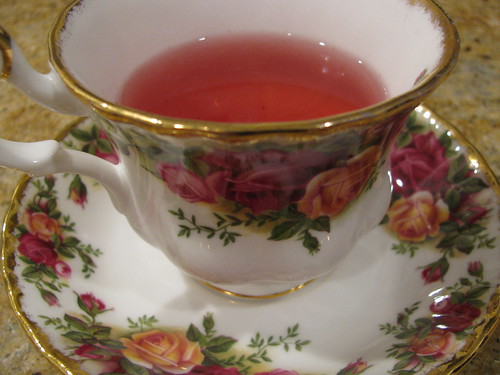
Apricot Peach Tea

Want to optimize your learning? Go to sleep. That's what John Medina suggests in Brain Rules: 12 Principles for Surviving and Thriving at Work, Home, and School.

I particularly love how Medina discusses differences in sleep patterns. Some of us are larks, some of us owls, and others a mix. If you're a lark, your best learning and working time will be in the morning. By nine o'clock p.m. you're going to want to turn in for the night (and forget about joining a late-night study group).

Owls, on the other hand, begin to heat up around 6 p.m. Bedtime before 3 a.m. is unappealing. Flex people like me can manage morning and night fairly equally (though we are generally up for a 2 p.m. nap :). For me, it's catch as catch can. If I feel inspired to study, I should. Though it couldn't hurt to study in the evening, since dreams might solidify learning.

These days, I try to study French at both ends of the day. A morning dip into my French text (hey, I just finished French One! :) and an evening dip into a French children's book or poem. French music is my mid-day companion.

This week, I thought it quite fitting to compose a little poem based on the French saying, "Who has a good neighbor, has a good morning." I do think that the neighbor might be better or worse depending on how he's honoring his particular sleep patterns.


Qui a, Who Has

Qui a bon
voisin, who has
a good neighbor,
qui a bon matin,
has a good morning.

Qui a bon matin,
may, after nibbling
raisins and cinnamon,
coffee and cream,
be that sweet neighbor

who brings your
sweet morning in.

For more on sleep and learning, check out Brain Rules: sleep.

Apricot Peach Tea (doesn't keep me up at night) photo, by L.L. Barkat.

---

Want to participate in French on Fridays, but don't know French? Type any English word here and get a translation into French. Include your word in a poem or vignette. Or just write about anything French (music, history, art, food, family stories). We're flexible. If you feel comfortable doing so, link back here in your post. That way we have a meeting place.

Labels: , , ,

30.10.08

Poetry as Stress Relief


If stress causes brain damage (and we don't want that), a logical question is, how do we minimize stress in our lives?

Oddly enough, it doesn't always mean we have to change our situations. Sometimes we can't. For instance, we might have a job that's causing us stress, and we don't have other immediate options. What can we do?

John Medina, author of Brain Rules, observes that the "biggest part of successful stress management involves getting control back into your life." He says that employees need a "way out" of the stress they feel at work. This could mean reorganizing one's priorities, letting go of a few things or of our visions for perfection, or being honest with co-workers about things that need to change.

And I'd like to suggest an overlooked option— the power we gain by writing. I'm sure there is research out there somewhere that proves this is true, but I can simply say from my own experience that writing helps us shape our pain, explore our emotions, unravel and refashion our thoughts.

Writing poetry is a particularly marvelous way to do this, as we narrow everything down to the bare essentials, the center, and express it in beautiful language. This is an act of supreme control and creativity where chaos may otherwise be reigning.

If you try your hand at writing poetry for stress relief, let the people who are doing Random Acts of Poetry know about it. Maybe your work will be featured sometime. And there's nothing like sweet recognition to provide a little stress relief too.


Thanks to High Calling Blogs for sharing this Billy Collins poetry video.

RELATED:

Erica's Poetry Friday
Scot McKnight's Poetry and Kathleen Norris

Labels: , , , ,

24.10.08

Educating with Our Brains in Mind

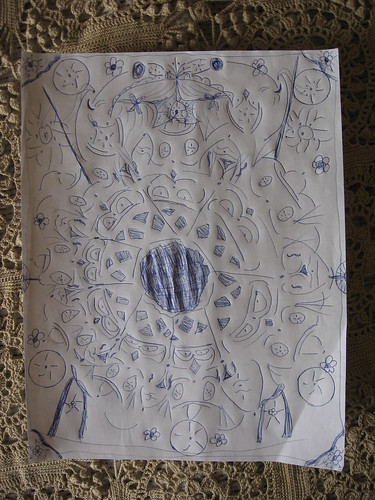
Pen Drawing 1

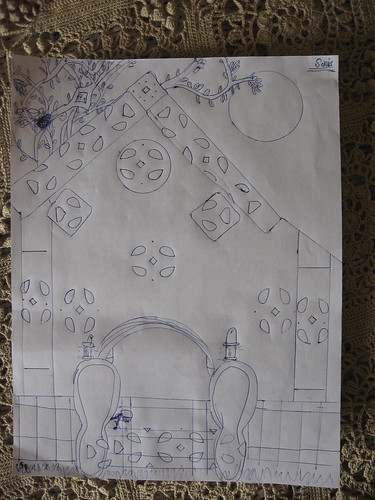
Pen Drawing 3

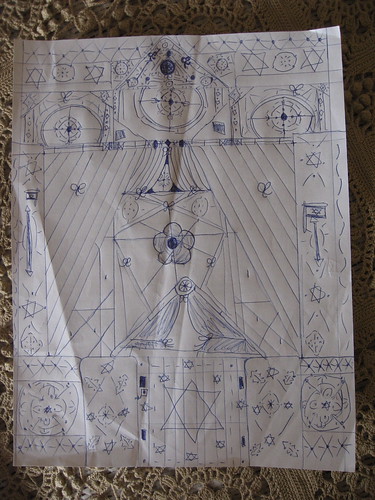
Pen Drawing 2

Pen Drawing 4

I'm enthralled with the brain— that little piece of grey matter that directs my life and yours. I don't know that I ever thought much about it in the past, but recently I've been reading, and reading, and reading about the brain.

The implications are stunning. Really. If we were to take seriously what we now know about the brain, we might do as John Medina (author of Brain Rules) suggests and totally reorganize how we teach and learn, how we work, how we schedule, how we build, and how we plan our communities. You name it.

For today, I just wanted to say... YES! YES! YES! And I wanted to say this very simply by sharing these drawings from my 9-year-old.

I was a public school teacher. I worked with countless kids and tried to give them the space they needed to cultivate the genius that really was inside each of them. But it was hard to do within the particular systems I worked in.

Now, as a home educator I have the freedom to work with my kids' brains in ways that are helpful to their individual and universal brain needs. So. Exhibit A. My daughter did these drawings while listening to a book on tape (at a loud volume, which she prefers). She sat in a sunny spot on her floor to do it. She interrupted herself countless times to move around the room. She chose her own materials, including many small toys she used as stencils or edges. In short, she created the exact learning environment she needed to produce some very lovely drawings.

I think these drawings are fantastic, but I also think that many other children are capable of fantastic drawings, experiments, written work, building projects, math discoveries— whatever!

Maybe it really is time for us to pay attention to the matter of our little grey matter.


Drawings by Sonia. Photos by L.L. Barkat.

Labels: , , , ,

10.10.08

Stress Causes Brain Damage

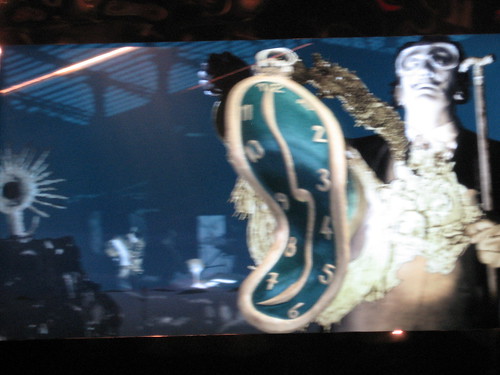
Salvador's Clock

The other day, a friend of mine admitted he was feeling stressed. That same day, he made a big decision to take a social media sabbatical.

According to Dr. Richard Restak, author of Mozart's Brain and the Fighter Pilot, my friend's decision is probably a good idea. Because stress causes brain damage.

Of course, when we're living in a stressed-out condition, we don't perceive the death of our brain cells. Yet we do feel the little deaths all around... of our sanity, of the health of our relationships, of our physical well-being. So why do we persist in our approach?

Maybe it's because we believe in the myth of multi-tasking. We think our brain can pay attention to multiple things at a time. Says molecular biologist John Medina, author of Brain Rules, "Businesses and schools praise multi-tasking, but research clearly shows that it reduces productivity and increases mistakes."

The statistics are startling. Medina shares, "Studies show that a person who is interrupted [supposedly multi-tasking] takes 50 percent longer to accomplish a task. Not only that, he or she makes up to 50 percent more errors." Some of the most dangerous scenarios? Talking on a cell-phone while driving (it's like driving drunk).

But back to our ordinary, non-vehicular lives. A mom or dad trying to muster energy to prepare healthy meals. Parents searching for patience with little ones. A young woman trying to make it through another day at the office. What does it cost to try to multi-task, when in fact the brain isn't designed to do that?

Stress. Invisible brain damage. And maybe some damage to things that aren't so invisible.

Medina recommends, "Try creating an interruption-free zone during the day— turn off your e-mail, phone, IM program, or BlackBerry— and see whether you get more done." And see, I would add, if your stress begins to fade away.


Quotes from Brain Rules are from p.93, 87, 93. Salvador Dali artwork photo taken in Paris at Espace Dali, by L.L. Barkat.


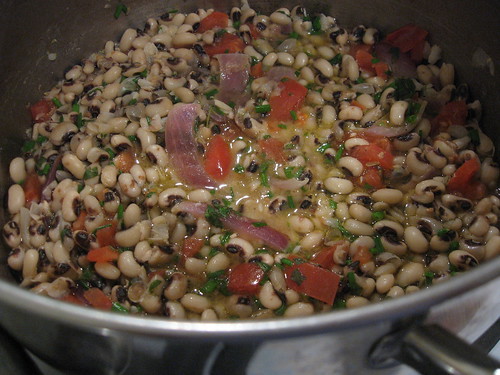
Black-Eyed Peas

Stress-Free Black-Eyed Peas

On a night when I'm looking for something really simple, this dish is a great choice.


Saute until lightly browned...

• red onion, chopped chunky


Add and saute about 5 minutes...

• 1/2 tsp cumin (add spices before tomatoes, so they dissolve in oil)
• 1/2 tsp fennel seed
• 1/4 to 1/2 tsp cayenne pepper
• 1 TB soy "bacuns"
• garlic, minced
• two fresh tomatoes, chopped (or one small can)


Add and saute until thickened...

• 2 cups dry (soaked and then cooked) or two to three cans black-eyed peas


Finish...

Toss in some fresh chives and or chopped parsley. Drizzle with olive oil.


Serve over rice or with crusty bread, green beans and salad. Relax and enjoy. : )

Labels: , , , , , ,